For April’s featured article we take a look at “A longitudinal Analysis: The Moderating and Mediating Effect of Alcohol Outcome Expectancies on Traditional Masculine Gender Norms and Alcohol use Among Latino Immigrant Men.” The author told us about the findings of their article and the potential areas that this research could be taken in the future.
Cabrera Tineo, Y. A., Wang, W., Peña, J. M., Rojas, P., Sanchez, M., & De La Rosa, M. (2026). A longitudinal analysis: The moderating and mediating effect of alcohol outcome expectancies on traditional masculine gender norms and alcohol use among Latino immigrant men. Psychology of Men & Masculinities. Advance online publication. https://doi.org/10.1037/men0000556
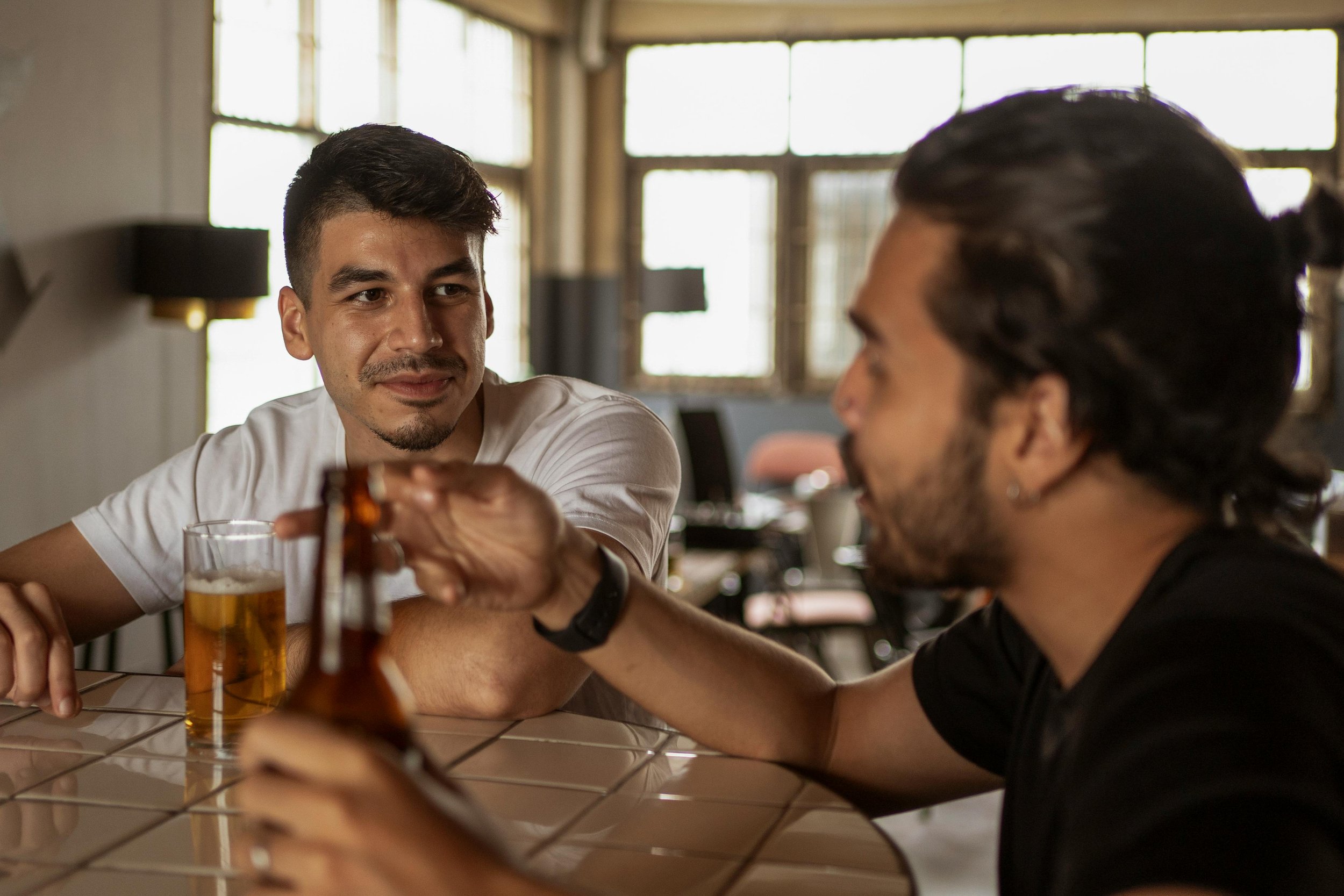
Image by Ketut Subiyanto: Pexels
What were the key questions you were addressing in this article?
In this article, we examined the mechanisms linking traditional masculine gender norms (i.e. machismo) to alcohol use through alcohol outcome expectancies over time among Latino immigrant men. Specifically, we tested competing linear mixed-effects models to evaluate both moderation and mediation pathways. First, we assessed whether traditional machismo and caballerismo interacted with positive and negative alcohol outcome expectancies to predict alcohol use. Second, we examined whether alcohol outcome expectancies mediated the association between these masculine gender norms (traditional machismo, caballerismo) and alcohol use.
What were the main conclusions of your article?
The study found that traditional machismo was inversely associated with alcohol use, whereas positive alcohol outcome expectancies (AOEs) were associated with greater alcohol consumption. Traditional machismo was also linked to stronger positive AOEs, which in turn predicted higher alcohol use, indicating an indirect pathway. Notably, mediation analyses revealed a suppression effect: when positive AOEs were included in the model, the relationship between traditional machismo and alcohol use shifted from negative to positive, highlighting the importance of examining more complex models rather than interpreting traditional machismo in isolation. Additionally, both positive and negative AOEs moderated this relationship, with stronger positive AOEs weakening the inverse association between traditional machismo and alcohol use and stronger negative AOEs strengthening it.
What are the key implications of your article for research, policy, or practice?
This study suggests that traditional machismo should not be interpreted as a uniform risk or protective factor for alcohol use among Latino immigrant men. Instead, its influence appears to depend on alcohol-related cognitions, particularly alcohol outcome expectancies. These findings highlight the importance of moving beyond one-dimensional interpretations of masculinity and considering the cognitive and cultural contexts that shape drinking behaviors. For practice, this supports the use of culturally responsive, strength-based interventions that explore how Latino men understand masculinity and how those beliefs may influence motivations for drinking. At the policy level, the findings point to the value of developing culturally tailored prevention and psychoeducational programs that address both gender norms and alcohol-related beliefs to reduce problematic drinking in this population.
Where do you see this line of research heading in the future (i.e., what’s next)?
I see this line of research moving toward clarifying the inconsistent findings regarding the relationship between gender norms and alcohol outcomes, particularly over time. Much of the discrepancy likely stems from the predominance of cross-sectional research, as well as differences in measurement and the specific alcohol outcomes examined. Future studies should therefore investigate how masculine gender norms relate to distinct alcohol outcomes, such as general alcohol use, binge drinking, and alcohol-related problems. There is also a need to develop measures that better capture how gender norms are shaped by acculturation processes among Latino populations of different origins. Ultimately, this work can inform the development of culturally tailored alcohol prevention and intervention programs that address both gender norms and alcohol-related cognitions, such as alcohol outcome expectancies, that influence drinking behaviors.
How did you become interested in this line of inquiry?
My interest in this line of research is informed by my transnational upbringing and experiences as a Dominican American. Growing up in a traditional Latino household while also being exposed to diverse perspectives on gender and identity sparked my curiosity about how culture shapes worldviews, values, and behaviors. This led me to focus on gender norms, particularly because of how deeply embedded they are in cultural contexts and how they shape expectations about masculinity and femininity. Over time, this interest evolved into examining how adherence to masculine gender norms may influence health-related behaviors, such as alcohol use, which ultimately motivated my research on masculine gender norms and alcohol-related cognitions among Latino men.

Yajaira A. Cabrera Tineo, Ph.D. (She/Her)
Postdoctorate Associate
Center for Research on US Latino HIV/AIDS and Drug Abuse (CRUSADA)
Robert Stempel College of Public Health & Social Work
Florida International University